
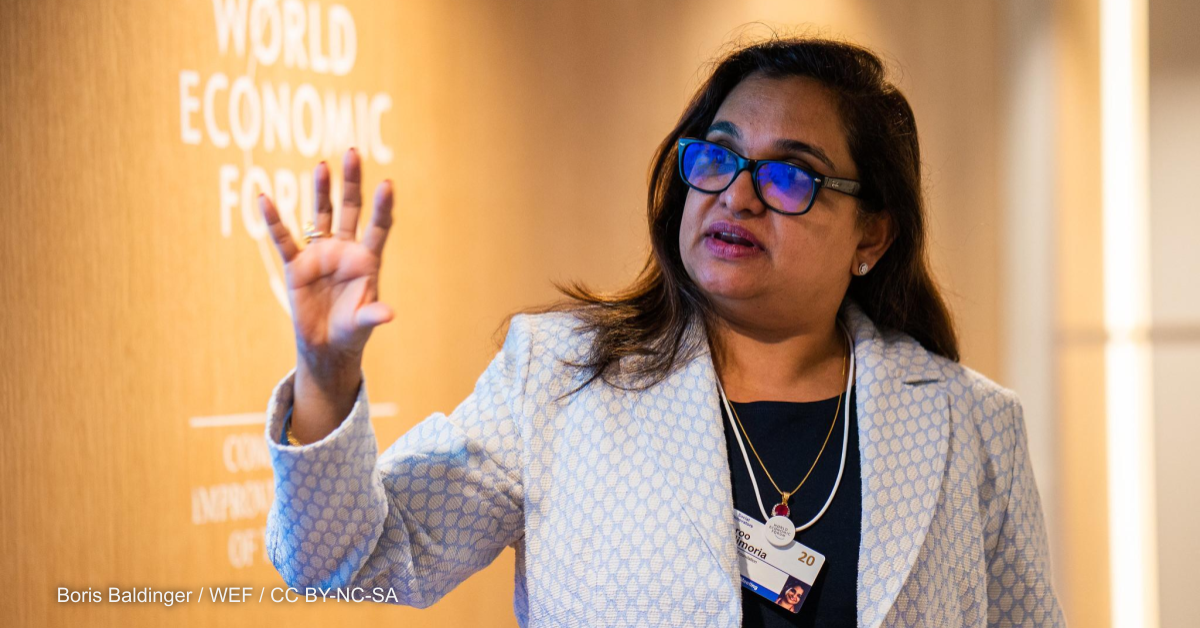
Devex.
When it comes to social entrepreneurship, few names shine as brightly as Jeroo Billimoria. An Indian social innovator and children’s rights advocate, she has founded multiple international organizations dedicated to empowering youth, improving financial literacy, and ensuring that every child’s voice is heard. Through her work with Childline India Foundation, Aflatoun International, and Child and Youth Finance International (CYFI), Jeroo has reshaped the global conversation on children’s welfare, education, and inclusion.
Early Life and Education
Born in 1965 in Mumbai, India, Jeroo grew up in a Parsi family deeply committed to social service. Her parents were both active in community development, instilling in her a lifelong sense of civic duty. After completing her bachelor’s degree in commerce from the University of Mumbai, she pursued a master’s in social work from the Tata Institute of Social Sciences (TISS). She later earned another master’s degree in organizational development from Case Western Reserve University in the United States. These academic foundations would equip her to blend compassion with strategic thinking—a hallmark of her later initiatives.
Founding Childline India Foundation
Jeroo began her social work career helping street children in Mumbai. She quickly realized that many children in crisis had nowhere to turn for immediate help. In response, she launched Childline 1098 in 1996, India’s first 24-hour toll-free helpline for children in distress. The service connected at-risk youth with medical aid, shelter, counseling, and protection services. Supported by the Government of India and UNICEF, Childline became a national safety net for millions of children.

Childline India Foundation.
Today, Childline India Foundation operates across more than 500 districts and has responded to over 70 million calls. The 1098 helpline has become synonymous with child protection in India—a testament to how one visionary idea can scale nationally when rooted in empathy and partnership.
Aflatoun International: Teaching Children About Money and Rights
After Childline’s success, Jeroo turned her attention to another major gap—financial literacy for children. In 2005, she founded Aflatoun International, headquartered in Amsterdam. The organization introduced the idea of “social and financial education” for children and youth, teaching them about saving, entrepreneurship, and social responsibility through storytelling and school-based programs.
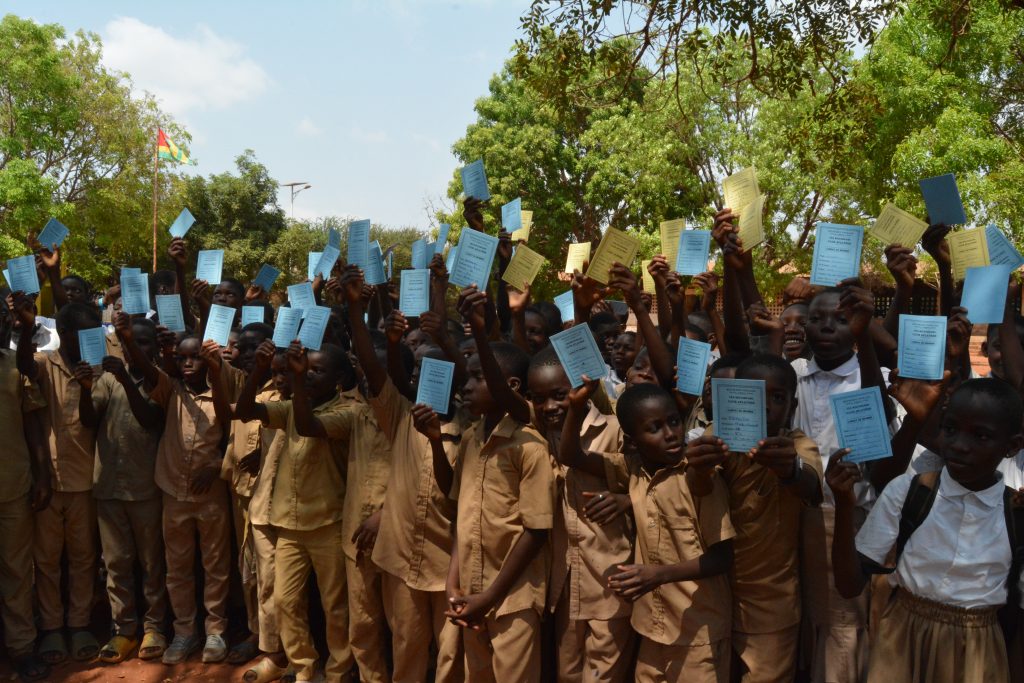
Source: Aflatoun International.
What began as a pilot in India quickly spread globally. Today, Aflatoun partners with ministries of education and NGOs in over 100 countries, reaching more than 10 million children. The curriculum blends civic values with practical money skills—encouraging young people not just to dream, but to plan and act responsibly. Aflatoun’s approach has been praised by the World Bank, UNESCO, and UNICEF for integrating life skills into formal education systems.
Child and Youth Finance International (CYFI)
Jeroo’s next major project, Child and Youth Finance International, took her mission to a systemic level. Founded in 2011, CYFI is a global movement that brings together governments, banks, and educators to create policies supporting financial inclusion for children and youth. Under her leadership, CYFI launched Global Money Week, an annual awareness campaign celebrated in more than 175 countries, teaching young people about saving, budgeting, and entrepreneurship.
CYFI’s policy work influenced several central banks to create youth-friendly financial products, and the organization was instrumental in pushing the global agenda for financial inclusion as part of the UN Sustainable Development Goals (SDGs).
Leadership Philosophy
Jeroo’s leadership philosophy is grounded in collaboration and systems thinking. She believes that solving large-scale social problems requires aligning diverse stakeholders—government, civil society, and the private sector—around shared goals. Her organizations are notable for their decentralized structures, empowering local leaders to adapt programs to community needs.
In interviews, she often emphasizes that social entrepreneurs should “build systems, not empires.” This mindset has allowed her initiatives to thrive independently, even after she stepped down from daily management roles. Each organization continues to operate sustainably, driven by local ownership and international cooperation.
Recognition and Global Impact
Jeroo Billimoria’s achievements have earned her numerous accolades worldwide. She was named an Ashoka Fellow, a Skoll Foundation Awardee, and one of the World Economic Forum’s Schwab Social Entrepreneurs. In 2011, she was listed among the Top 50 Leading Women Entrepreneurs of India by the Confederation of Indian Industry (CII). Her work has also been featured by Forbes, The Guardian, and the World Bank as a model of scalable social innovation.
Through her initiatives, Jeroo has improved the lives of over 100 million children globally—empowering them with education, financial literacy, and protection. Her influence extends across continents, from classrooms in Africa to policymaking tables in Europe.
Continuing the Mission
Even after stepping away from executive roles, Jeroo remains active as a mentor, strategist, and advisor to international networks of changemakers. She continues to advocate for youth empowerment, financial literacy, and cross-sector collaboration through speaking engagements, think-tank participation, and advisory boards.
She is also a vocal proponent of the idea that “children are not just beneficiaries of change—they are its architects.” This belief underpins all her work, ensuring that young voices remain central to global development dialogues.
Lessons from Her Journey
- Start with empathy, build with structure. She began by listening to street children and built organizations grounded in their lived realities.
- Scale through partnership. Every initiative she founded grew by aligning with government systems and global allies.
- Empower others. True leadership, in her view, means making yourself unnecessary by enabling others to lead.
- Keep learning. From Mumbai’s streets to Amsterdam’s boardrooms, she kept evolving her approach as the world changed.
Legacy
Jeroo’s legacy lies not just in the organizations she founded but in the ecosystems of care and inclusion she helped create. She has shown that when compassion meets strategy, and when youth are treated as partners in progress, the results can transform societies. Her story stands as a powerful reminder that social entrepreneurship is not about charity—it’s about building systems that make fairness and opportunity permanent.
References
- Aflatoun International. (n.d.). About us: Our story. Retrieved from https://www.aflatoun.org
- Child and Youth Finance International. (n.d.). Our mission and history. Retrieved from https://childfinanceinternational.org
- Childline India Foundation. (n.d.). About Childline 1098. Retrieved from https://www.childlineindia.org
- Forbes India. (2011). Women entrepreneurs who are changing India.
- Skoll Foundation. (n.d.). Jeroo Billimoria profile. Retrieved from https://skoll.org
- UNICEF. (2015). Childline India and national child protection systems.
- World Economic Forum. (2012). Schwab Foundation social entrepreneurs of the year.
Disclaimer: We highlight inspiring humanitarian and advocacy initiatives like this to encourage awareness and positive action. Please do your own due diligence before providing any assistance or support to ensure your contributions reach legitimate and verified causes.
Leave a Reply